

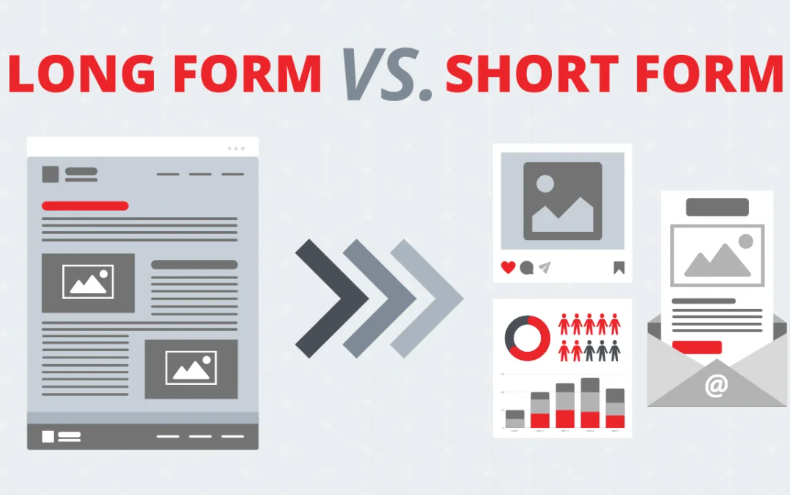
Long-Form vs Short-Form Content: When to Use Each
In the ever-evolving world of content marketing, one question always seems to pop up:
Should I write long-form or short-form content?
The answer? It depends.
Both content styles serve unique purposes, and choosing the right one depends on understanding your audience, goals, and context.
In this post, we’ll discuss the difference between long-form and short-form content, their pros and cons, and when to use each for maximum impact.
What’s the Difference?
Short-Form Content
Typically under 1,000 words, short-form content is quick, digestible, and to the point.
Examples:
Social media posts
Email newsletters
Short blog posts
Product descriptions
FAQs
YouTube Shorts, Reels, or TikToks
Long-Form Content
Usually 1,200+ words (sometimes even 3,000+), long-form content dives deeper into a topic with detailed insights, research, and value.
Examples:
In-depth blog posts
Whitepapers and ebooks
Ultimate guides
Long-form videos or podcasts
Case studies
✅ Pros & Cons of Each
Short-Form Content
Pros:
Easy to create and consume
Ideal for mobile users
Great for social media and attention-grabbing posts
Faster turnaround time
Encourages quick engagement
Cons:
Limited depth and detail
Lower potential for organic search traffic
May struggle to stand out in competitive spaces
Long-Form Content
Pros:
Higher SEO potential (more keywords, backlinks, dwell time)
Builds authority and trust
Ideal for complex topics and evergreen content
Encourages more in-depth engagement
Can be repurposed into smaller content pieces
Cons:
Time-consuming to research and create
Can overwhelm if not well-structured
Not ideal for every channel or audience
When to Use Short-Form Content
Short-form is perfect when:
You want to boost brand visibility quickly on platforms like TikTok, Instagram, or Twitter/X.
Your audience is on the go and prefers bite-sized info (e.g., busy professionals, mobile users).
You’re testing an idea or promoting a larger content asset.
You want frequent content to stay top-of-mind with your audience.
You’re writing for awareness-stage content, like quick tips or industry news.
Use it for:
Social posts, email promos, video teasers, quick “how-to” blogs, thought leadership snippets.
When to Use Long-Form Content
Go long-form when:
You’re targeting high-value SEO keywords and want to rank on Google.
You need to explain a complex topic thoroughly (think tutorials, guides, or industry breakdowns).
You’re building authority in your space and want to become a trusted resource.
Your content is aimed at the consideration or decision stage of the buyer journey.
You want a content asset that can be repurposed across formats (videos, carousels, infographics, etc.).
Use it for:
Evergreen blog posts, pillar content, product comparisons, whitepapers, and cornerstone guides.
Combine Both for a Strong Strategy
The best content strategies use both long-form and short-form content in a complementary way.
Here’s how:
Use short-form to drive traffic to your long-form content (e.g., a social post linking to an in-depth guide).
Repurpose long-form content into short-form snippets for different platforms.
Test ideas with short-form first, then expand the winners into full posts or guides.
Map content format to the buyer’s journey, using short-form for awareness and long-form for deeper engagement.
Final Thoughts
There’s no “better” format—just the right one for the job.
Want to rank on Google and build authority? Go long.
Want to show up consistently, stay relevant, and drive engagement? Go short.
Want to win? Do both strategically.
Balance is key. Let your audience’s needs, your goals, and your resources guide your decision, and use each format where it makes the most impact.